Tag: technology

Seeing complexity

THE SECRET WEAPON IN PLAIN SIGHT

There is a quiet assumption that sits at the heart of modern organisations. It is rarely stated, yet widely believed. The assumption is that direction determines outcome. That those at the top, by virtue of their position, clarity, and authority, shape not only the strategy of an organisation, but also its culture, performance, and ultimately its success.
This assumption has served us well in simpler times. In systems where causality could be traced, where decisions could be followed through with reasonable predictability, where the distance between intent and outcome was manageable. In such systems, it made sense to look upward for explanation and downward for execution. But most organisations today no longer operate in such conditions. They operate in complexity.

HISTORY MATTERS: A COMPLEXITY VIEW OF STRATEGY

An anthropologist learns early to resist the lure of the “now” as the only reality worth studying. Cultures carry their past within them. Patterns of thought, the metaphors that shape our stories, the values that determine what we ignore and what we celebrate. These change far more slowly than market conditions. The same is true in organisations. Beneath the fresh branding and the new strategic frameworks, much of the underlying thinking is amazingly persistent. What changes most is the language in which it is dressed.

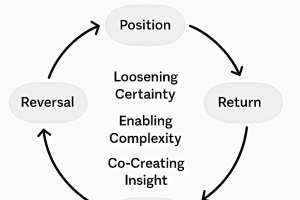
APPLYING THE OPEN SHIFT PROTOCOL TO BUSINESS COLLABORATION

This blog introduces the Open Shift Protocol—a simple yet profound method for enhancing collaborative thinking and decision-making. By encouraging individuals and teams to iteratively adopt and emotionally inhabit opposing perspectives, the method loosens rigid thought patterns and fosters deeper, more creative insight. Drawing on principles from emotional intelligence, dialectical reasoning, and creativity research, it offers a unique and structured approach to co-creation that transcends conventional brainstorming or debate, making space for innovation to emerge from complexity and discomfort.

BEYOND SYSTEMS THINKING: TOWARDS A COMPLEXITY THINKING ETHIC

This piece proposes that complexity thinking is not just a methodology. It’s a moral and epistemic stance. It begins with the unsettling truth that we are not neutral observers of a system, but implicated participants. It asks us to let go of managerial comfort, inherited roles, and stakeholder entitlements and to dwell in ambiguity as a source of real possibility.

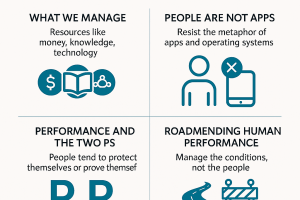
people are not apps

PEOPLE ARE NOT APPS: THE HUMAN TRUTH BEHIND ENTERPRISE PERFORMANCE

People aren’t apps, and motivation isn’t something you can install. Unlike money or tech, human beings can’t be managed—they choose, adapt, protect, or engage depending on the culture around them. Enterprise roadmending is about spotting the quiet cracks before they break the whole system. It’s not about control, but conditions. You don’t engineer trust or performance—you make them possible. In the digital age, real leadership means tending the soil, not writing the code.