
We live in the age of complexity. Stephen Hawking, when asked at the start of this century what the defining characteristic of the 21st century might be, replied simply: complexity. His point was not that other sciences, physics or biology would vanish, but that the lens through which we experience life, technology, and society would be increasingly complex.
Complexity, however, does not just belong to systems, models, and theories. It also belongs to us. As Viktor Frankl reminded us, humans are meaning-makers. Our search for meaning is the primary driver behind our choices and our ability to live with uncertainty. In moments of disorientation, this meaning-making becomes both a survival tool and a creative act.
Early 19th century writer Charles Lamb once wrote that “it is good to love the unknown.” That is easier said than done. The unknown, today, is rarely poetic. More often, it overwhelms us with information, stimulation, and noise. To live, individually and collectively, requires us to make sense of bewildering conditions.
And this is where intuition emerges. Einstein called it the only truly valuable thing. Research backs him: the best intuitors are not those with more data but those who can act decisively with less. They are able to discern patterns and make good decisions in the face of scarcity. But intuition requires courage. Trusting what cannot be fully proven, and acting before all the information arrives, demands a leap.
At the beginning of The Divine Comedy, Dante writes: “Midway along the journey of our life I woke to find myself in a dark wood, for I had wandered off from the straight path.” He is paralysed by fear until Virgil, his guide, challenges him: “Why do you relish living like a coward?” Dante recovers and admits, “At last my crippled courage stood upright.”
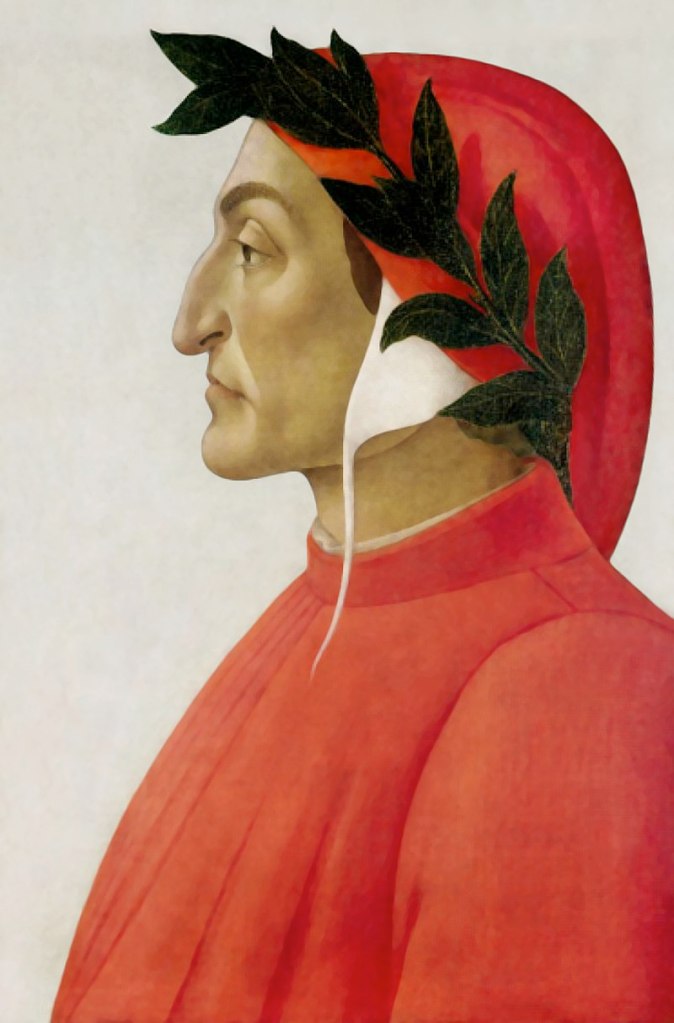
This small exchange carries two truths. First, courage can be crippled by bewildering conditions, but it can also be recovered with the support of others. Second, courage is a virtue. As Aristotle wrote, “You will never do anything in this world without courage. It is the greatest quality of the mind next to honour.” In times of uncertainty, courage is not an optional extra, it is the appropriate response.
We rarely use the word courage when talking about work. Organisations tend to frame decisions in terms of data, analysis, and rationality. And rightly so: no strategy or business decision can do without them. Yet we forget that organisations are made of human beings. And human beings cannot escape their need for meaning.
Every employee, every manager, enters the workplace with some sense of meaning, whether rich and full or fractured and absent. That sense inevitably leaks into strategy-making, into boardroom conversations, into the ways decisions are shaped. A group of managers who feel their work is meaningful will engage differently from those who experience work merely as a way to pay bills. One group will generate vitality; the other, stagnation.
Courage matters here because it helps us recover and create meaning. Courage allows us to see beyond the “just a job” mentality, to engage with an organisation’s purpose in ways that bring fulfilment. And in practical terms, it changes the quality of strategic decision-making.
It is tempting to think of courage as something innate, summoned only in extreme circumstances. Yet I suggest we can also create courage. To “create” implies a method, however loose.
One hint comes from philosopher Alfred North Whitehead: “To have seen things from one angle is not to have seen them.” Another from the Rashomon effect, a concpt based on Kurosawa’s film Rashomon: the discipline of considering contradictory perspectives. Method, then, begins with daring to see differently. Immanuel Kant described Enlightenment as sapere aude, translated form Latin meaning “dare to know.” To apply this today is to pause, look again, and dare to view what bewilders us from another angle.
When we do, complexity does not disappear, but it becomes meaningful rather than paralysing. Courage in this sense is not just about bravery, it is about creating the conditions for meaning to emerge.

Courage in the age of bewilderment is not simply endurance or heroism. It is the work of making meaning where meaning does not come easily. It is the willingness to trust intuition, to act with incomplete knowledge, to invite contradiction, and to create the possibility of clarity.
Maya Angelou once echoed Aristotle when she said: “Courage is the most important of all the virtues, because without courage you can’t practice any other virtue consistently. You can practice any virtue erratically, but nothing consistently without courage.”
The bewilderment of our age will not end. But neither must our courage remain crippled. We can recover it, summon it, and even create it. So that what first seemed overwhelming may, in time, yield meaning, both in our work and in our lives.
Categories: Uncategorized
 .ROADMENDER